E27 Bulb Guide: Which Bulb Should You Choose for Your E27 Light Fixture?

Light fixtures with an E27 socket are very common in European homes. You can find them in pendant lights, wall lights, ceiling lights, bedside lamps and table lamps. Their biggest advantage is convenience: the bulb can be replaced easily, and there are many bulb options available.
However, this wide choice also leads to common mistakes. A bulb that is too bright may cause glare, a colour temperature that is too cold can make a room feel less welcoming, and a bulb that is too large may stick out from the shade. To choose the right E27 bulb, you need to consider wattage, lumens, colour temperature, shape and the room where it will be used.
What is an E27 bulb?
An E27 bulb is a bulb with a large screw base. The number 27 refers to the diameter of the base, which is approximately 27 mm. It is one of the most widely used bulb bases for indoor lighting.
E27 sockets are often used in decorative lighting, such as dining room pendant lights, wall sconces, living room lamps and open ceiling lights where the bulb remains visible.
The important point is this: E27 only describes the base type. It does not mean that all E27 bulbs have the same wattage, size, brightness or lighting effect.
Check the maximum wattage of the fixture first
Before buying an E27 bulb, always check the maximum wattage allowed by the light fixture. This information is usually shown near the socket, on the label or in the product description, for example “Max 40W” or “Max 60W”.
This limit is mainly related to heat. A bulb that is too powerful may generate too much heat, especially inside a closed shade, a small glass globe or a narrow wall light.
LED bulbs consume much less power than old incandescent bulbs. For example, an 8W to 10W LED bulb can often replace an old 60W incandescent bulb. Even so, the maximum wattage stated by the fixture manufacturer should always be respected.
Do not choose by watts only: look at lumens
Many people still choose a bulb mainly by looking at watts. In reality, watts describe power consumption, not the actual brightness.
To know whether an E27 bulb is bright enough, look at the lumen rating. The higher the lumen value, the more light the bulb produces.
- 400 to 600 lm: soft light for bedside lamps, small wall lights or cosy accent lighting.
- 700 to 900 lm: suitable for living room lamps, wall lights or small pendant lights.
- 1,000 to 1,500 lm: useful for larger rooms or main lighting.
- Over 1,500 lm: better for large spaces or fixtures designed for stronger brightness.
For decorative fixtures with a visible bulb, moderate brightness is often more comfortable because exposed bulbs can easily cause glare.
Which colour temperature should you choose for an E27 bulb?
Colour temperature has a strong impact on the atmosphere of a room. It is measured in kelvins and is usually marked with “K” on the bulb packaging.
- 2700K to 3000K: warm white light, suitable for living rooms, bedrooms, dining rooms and restaurants.
- 4000K: neutral white light, practical for kitchens, home offices and work areas.
- 6000K to 6500K: cool white light, useful for some functional areas, but often less cosy in living spaces.
For many European interiors, an E27 bulb in warm white 2700K or 3000K is a comfortable choice. It creates a softer and more welcoming atmosphere, especially with wood, black metal, glass or vintage-style light fixtures.
Which E27 bulb shape is best?
E27 bulbs come in many different shapes. The right choice depends on the fixture, the available space and the style you want to create.
Globe bulb
A globe bulb is round and decorative. It works well with open wall lights, pendant lights and fixtures where the bulb is visible. It adds a warm, slightly retro look to the room.
Standard bulb
The standard bulb shape is the most versatile. It can be used in many table lamps, simple ceiling lights, pendant lights and fixtures with lampshades.
Filament or Edison bulb
LED filament bulbs and Edison-style bulbs are often used with industrial, rustic or vintage fixtures. They are decorative and create atmosphere, but some models are designed more for visual effect than strong brightness, so it is important to check the lumen rating.
Compact E27 bulb
For small lampshades, narrow wall lights or closed glass fixtures, a compact E27 bulb may be more suitable. Before buying, check the height and diameter of the bulb to make sure it does not stick out or touch the glass.
Which E27 bulb should you choose for each room?
Living room
In the living room, warm white light between 2700K and 3000K is usually more pleasant. For a wall light or accent lamp, 400 to 800 lumens may be enough. For main lighting, you may need more brightness or several light sources depending on the room size.
Dining room
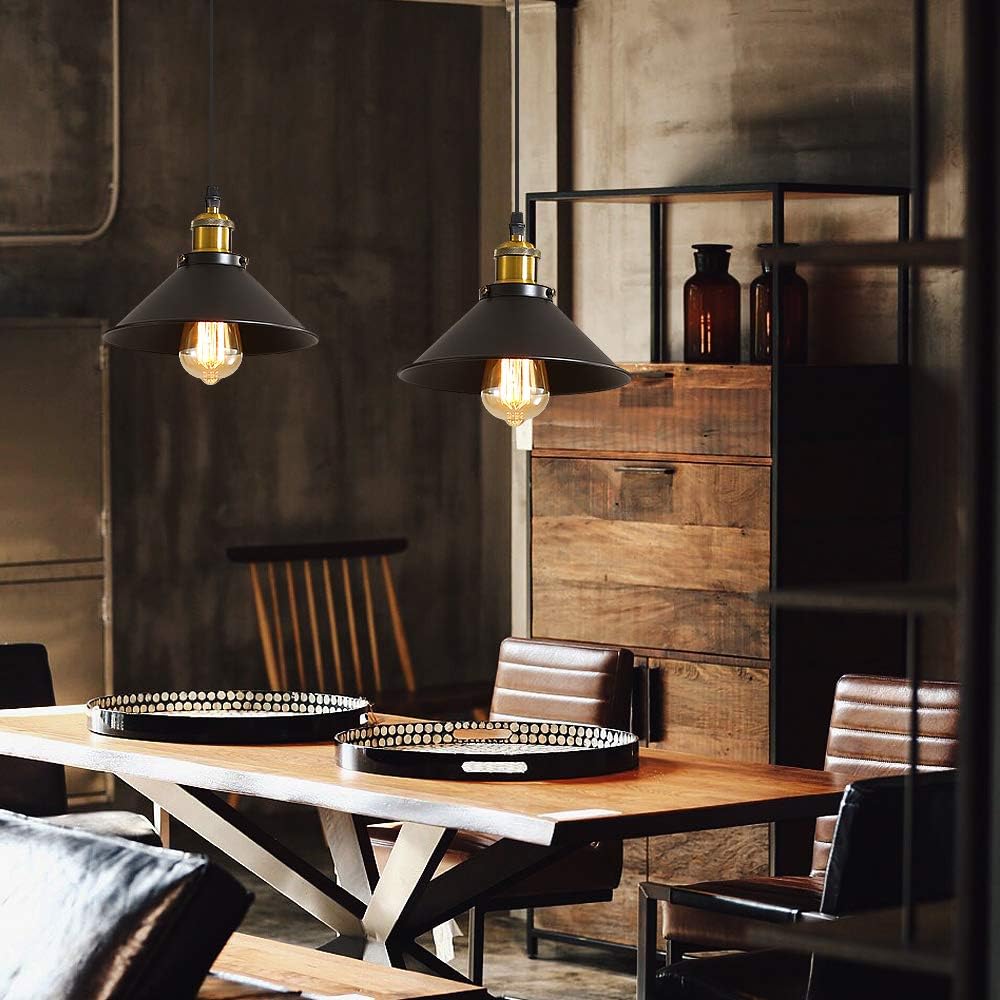
Above a dining table, warm light usually feels more inviting. If the bulb is visible, an E27 globe bulb or LED filament bulb can be a good option. Very cool white light may make the dining area feel less comfortable.
Bedroom
In the bedroom, the light should feel soft and not too harsh. For bedside lamps or wall lights near the bed, 400 to 700 lumens is often enough.
Kitchen
In the kitchen, clearer light can be helpful for daily tasks. An E27 bulb around 4000K can offer a good balance between visibility and comfort. For worktops, additional lighting may also be useful.
Hallway and entrance
In a hallway or entrance area, the goal is to create welcoming light without glare. Depending on the size of the space, 600 to 900 lumens is often suitable.
Pay extra attention when the bulb is visible
Many E27 fixtures, such as industrial pendant lights and decorative wall lights, leave the bulb exposed. In this case, the bulb affects not only the brightness but also the overall style of the fixture.
A bulb that is too bright or too cool can easily feel dazzling. A LED filament bulb, amber globe bulb or opal glass bulb can create a softer look. Opal glass spreads the light more evenly, while clear glass highlights the filament effect more strongly.
Should you choose a dimmable E27 bulb?
A dimmable E27 bulb allows you to adjust the brightness, but it does not work automatically with every fixture or every wall switch. Three points should be checked:
- The bulb must be clearly marked as dimmable.
- The wall dimmer must be compatible with LED bulbs.
- The fixture must not contain a system that is incompatible with dimming.
If these elements do not match, the light may flicker, buzz or fail to dim correctly. For simple everyday use, a non-dimmable E27 LED bulb is suitable for most rooms.
Common mistakes to avoid
- Choosing a bulb that is too large for a small lampshade.
- Looking only at watts and ignoring lumens.
- Using cool white light in a cosy living area.
- Installing a bulb that is too powerful in a closed fixture.
- Buying a dimmable bulb without checking dimmer compatibility.
- Forgetting that the bulb becomes part of the design in open fixtures.
Practical tips before buying
Before choosing an E27 bulb, take a few simple measurements. Check the available height inside the fixture, the diameter of the shade or glass globe, the maximum allowed wattage and the lighting atmosphere you want in the room.
For decorative lighting, a warm white E27 LED bulb with moderate brightness and a suitable shape is often the better choice. For functional lighting, focus more on lumens, beam angle and the right colour temperature for the task.
FAQ about E27 bulbs
Can any E27 bulb be used in any E27 fixture?
Not always. The base must be E27, but you should also check the maximum wattage, bulb size, fixture shape and intended use.
Which E27 bulb is suitable for a wall light?
For a decorative wall light, a warm white E27 LED bulb is often a good choice. If the bulb is visible, globe, filament or opal glass designs can improve the overall appearance.
How many watts should an E27 LED bulb have?
For wall lights or accent lighting, 6W to 10W is often enough. For main lighting, it is better to focus on lumens and room size rather than watts alone.
Which colour temperature is best for E27 bulbs?
Warm white between 2700K and 3000K works well in living rooms, bedrooms and dining rooms. Neutral white around 4000K is more practical for kitchens, home offices and work areas.
Does an E27 LED bulb get hot?
An LED bulb usually produces less heat than an old incandescent bulb, but it still generates some heat. In closed or poorly ventilated fixtures, choosing the right wattage is especially important.
Conclusion
Choosing an E27 bulb is not just about matching the socket. Lumens, colour temperature, bulb shape, size and the room function all affect the final lighting result.
For many living spaces, a warm white E27 LED bulb with suitable brightness and a shape that matches the fixture can create comfortable and balanced lighting. By checking these details before buying, you can avoid common mistakes and enjoy your E27 light fixture more in everyday use.